Introduction to SOA OS23
Technology never stands still, and every year we see new operating systems, frameworks, or platforms designed to make life easier for businesses and individuals. Among these fresh innovations is SOA OS23, a system that has been catching attention across industries. Whether you’re in IT, software development, business management, or just a tech enthusiast, understanding what SOA OS23 brings to the table can help you get ahead.
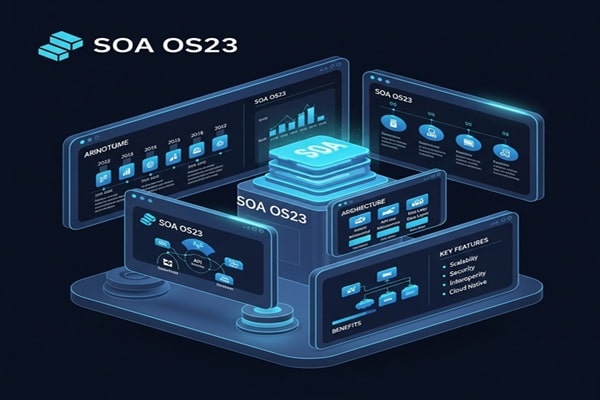
At its core, SOA OS23 builds on the concept of Service-Oriented Architecture (SOA), a design philosophy where different services communicate with one another seamlessly to create efficient, scalable systems. But what makes OS23 special is its unique blend of flexibility, speed, and cross-platform compatibility. It doesn’t just refine the SOA model—it pushes it further with modern requirements like cloud-native deployment, AI-driven optimization, and cybersecurity enhancements.
This article dives deep into what SOA OS23 is, why it matters, how it works, and how it’s transforming both business and technology landscapes. We’ll also explore its features, benefits, real-world applications, and how it compares to previous SOA-based systems.
What Exactly is SOA OS23?
If you’ve been hearing the term “SOA OS23” and wondering what it’s all about, let’s break it down. SOA, as many IT professionals know, stands for Service-Oriented Architecture. This architectural style has been around for a while and is widely used in enterprise IT systems. It enables different applications or components—often developed in different languages or running on different platforms—to communicate through standardized protocols.
SOA OS23, however, isn’t just another iteration of SOA. It’s designed to work as a modern operating environment that integrates traditional SOA principles with the latest technological advancements. Think of it as a bridge between classic SOA systems and the next generation of distributed applications powered by AI, IoT, and edge computing.
In practice, SOA OS23 is not just about backend integration. It also focuses on usability, scalability, and performance. It’s crafted for organizations that want to modernize their digital infrastructure without completely tearing down legacy systems. This makes it incredibly practical, as many companies still rely on old frameworks but want to adopt new capabilities without starting from scratch.
Key Features of SOA OS23
Any new system or platform rises and falls on its features. SOA OS23 has been built with modern demands in mind, and its standout capabilities make it far more than just an update. Let’s go through the most notable features.
Enhanced Interoperability
The first thing that sets SOA OS23 apart is its improved interoperability. Unlike older systems that required extensive coding to connect different services, OS23 allows for smooth integration across multiple environments. Whether you’re connecting cloud applications with on-premise tools or integrating AI models into a legacy financial system, interoperability is seamless.
Cloud-Native Design
We live in a cloud-first world, and SOA OS23 acknowledges that. It’s designed to be cloud-native, meaning it runs optimally in environments like AWS, Azure, or Google Cloud. But it doesn’t stop there—it also adapts well to hybrid setups, making it perfect for businesses that use a mix of cloud and on-prem infrastructure.
Built-In AI Optimization
Another feature worth noting is its AI integration. OS23 uses AI to analyze workflows, optimize service calls, and reduce bottlenecks. Instead of relying solely on manual configurations, the system learns and improves efficiency over time.
Security-First Architecture
In the current era of increasing cyber threats, security is non-negotiable. SOA OS23 incorporates advanced encryption, identity management, and compliance-friendly mechanisms out of the box. It’s designed to reduce vulnerabilities, making it reliable for industries handling sensitive data like healthcare and finance.
Why SOA OS23 Matters Today
You might ask, “Why should I care about SOA OS23?” The answer lies in the way businesses and technology are evolving. Today, companies are handling more data, connecting more devices, and serving customers across multiple platforms. A rigid IT infrastructure simply won’t cut it anymore.
SOA OS23 matters because it addresses these challenges directly. By combining flexibility, efficiency, and modernization, it provides an environment where businesses can innovate without abandoning their existing systems. For instance, a company using legacy ERP software doesn’t need to rip it out completely—they can connect it with modern cloud-based analytics tools through SOA OS23.
The system also matters because of its role in future-proofing organizations. With industries adopting AI, IoT, and blockchain at rapid speed, a platform that can integrate with these technologies is essential. SOA OS23 is built to adapt, making it a smart choice for businesses looking to stay competitive for the next decade.
SOA OS23 vs. Traditional SOA Systems
To really appreciate SOA OS23, it helps to compare it with older service-oriented systems. Traditional SOA has always been about breaking down monolithic applications into smaller services. While this approach brought scalability and flexibility, it also came with certain challenges like complexity in orchestration, slower performance, and security gaps.
SOA OS23 takes the same philosophy but modernizes it. Instead of requiring bulky middleware, it leverages lightweight APIs. Instead of relying on manual orchestration, it uses AI-driven automation. And instead of being limited to specific on-prem environments, it thrives in the cloud.
This means organizations adopting OS23 don’t just get incremental improvements—they get a system designed for the digital age. In many ways, SOA OS23 represents the natural evolution of SOA, one that addresses the shortcomings of the past while preparing for the needs of the future.
Business Benefits of SOA OS23
For businesses, adopting new systems is never just about technology—it’s about impact. SOA OS23 offers a range of benefits that translate directly into measurable outcomes.
Improved Efficiency
One of the clearest benefits is improved operational efficiency. By allowing different services to communicate without friction, businesses save time and reduce costs associated with manual integration.
Reduced Costs
Companies can avoid expensive rip-and-replace strategies for legacy systems. Instead, they can modernize gradually, integrating new tools through OS23. This makes digital transformation far more affordable.
Scalability and Flexibility
Growth demands scalability. SOA OS23 ensures businesses can scale operations without hitting technical roadblocks. Whether it’s onboarding new applications, expanding into new markets, or handling sudden surges in data, the system adapts quickly.
Real-World Applications of SOA OS23
SOA OS23 isn’t just theory—it’s being applied across industries in practical, transformative ways.
Healthcare
In healthcare, where patient data is spread across multiple systems, OS23 enables smoother interoperability. Hospitals can integrate electronic health records (EHRs), lab systems, and telemedicine platforms seamlessly, improving patient care.
Finance
Banks and financial institutions rely on speed and security. SOA OS23 allows them to connect traditional core banking systems with modern fintech apps, all while maintaining compliance and security.
Retail and E-commerce
For retailers, integration is everything. OS23 makes it easy to connect online storefronts, inventory systems, and customer service platforms, ensuring a unified shopping experience for customers.
Challenges and Considerations with SOA OS23
Like any technology, SOA OS23 isn’t perfect. While it solves many problems, organizations still need to consider challenges before adopting it.
Implementation Complexity
Transitioning to OS23 can be complex, especially for organizations with outdated infrastructure. It requires planning, skilled professionals, and sometimes additional investment.
Training Requirements
Teams need to be trained on the new system, which can take time and resources. Without proper training, the full potential of OS23 may not be realized.
Cost of Transition
While long-term costs are lower, the initial transition may involve software, consulting, and infrastructure expenses. Companies need to budget for this carefully.
The Future of SOA OS23
Looking ahead, SOA OS23 is expected to play a major role in shaping digital ecosystems. As businesses continue to embrace cloud-native environments, IoT networks, and AI-driven solutions, the demand for systems like OS23 will only grow.
Experts predict that future updates of OS23 will include deeper AI integration, real-time predictive analytics, and even more robust security frameworks. It may also evolve into a system that doesn’t just integrate services but actively orchestrates business outcomes through intelligent automation.
For now, what’s clear is that SOA OS23 isn’t just another operating environment. It represents a philosophy of modern, flexible, and secure integration, one that businesses can rely on for years to come.
Conclusion
SOA OS23 is more than just a buzzword—it’s a practical solution to real-world IT challenges. By blending the classic strengths of service-oriented architecture with modern technologies like AI, cloud-native design, and advanced security, it provides organizations with a platform that is both innovative and reliable.
For businesses struggling with legacy systems but eager to embrace digital transformation, SOA OS23 offers a path forward. It reduces costs, increases efficiency, enhances scalability, and prepares organizations for the technologies of tomorrow.