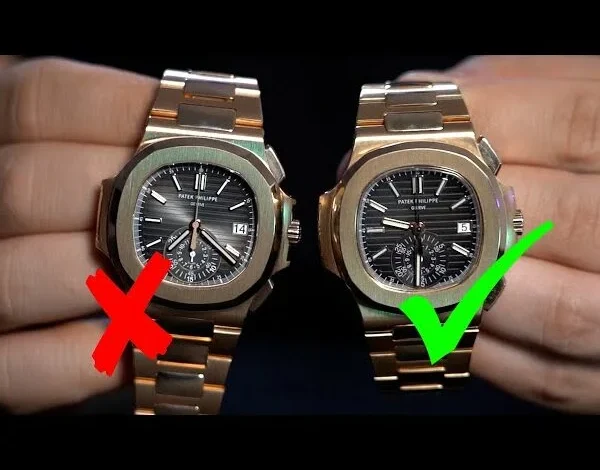
Counterfeit watches have become extraordinarily sophisticated. A decade ago, a fake Rolex Submariner was easy to catch: the seconds hand swept unevenly, the dial text looked off, and the weight felt wrong. Today, high-grade “super fakes” replicate crown guards, rehaut engravings, and even movement decorations closely enough to fool buyers who haven’t done their homework.
The pre-owned luxury watch market is worth an estimated $22 billion globally, and a meaningful percentage of pieces circulating online are not what they claim to be. If you’re spending $15,000, $80,000, or more on a pre-owned Rolex, Patek Philippe, or Audemars Piguet, knowing exactly what to look for is not optional. It is the difference between a sound investment and a very expensive mistake.
This guide covers the specific details that matter most, and the ones that are genuinely hardest to fake.
The Documents: What Should Come With the Watch
Before you look at the watch itself, look at the paper trail. Legitimate luxury watches come with documentation, and that documentation follows predictable rules.
Rolex
A modern Rolex (post-2020) should come with a green Rolex Oyster Perpetual card, which replaced the traditional warranty booklet. The card contains a reference number, serial number, and model name. Pre-2020 pieces should include a tan or beige warranty booklet stamped by an authorised dealer, plus a separate reference card for the model.
Key things to verify:
- The serial number on the card must match the serial engraved on the watch
- The dealer stamp should include a recognisable authorised retailer name and location
- The warranty booklet pages should show consistent, clean printing — counterfeits often have blurry text or inconsistent font weights
The box matters too. Rolex outer boxes are a specific forest green. Inner cushions, links trays, and cleaning cloths all have consistent material quality. A cheap-feeling box is a red flag, though it is not conclusive on its own.
Patek Philippe
Patek is arguably the most documentation-intensive of the three. Every piece comes with:
- An extract from the archives (often requested separately, but available for any registered Patek)
- A guarantee certificate with the reference and movement number
- The Patek Philippe blue box and booklets
The guarantee certificate should be laser-engraved, not printed. Run your finger over the text, genuine certificates have a raised tactile quality. The reference number on the certificate must match the caseback and movement.
For vintage Patek, request an archive extract directly from the manufacturer. Patek Philippe’s archive department will confirm production date, original configuration, and the first retail destination for a nominal fee. If a seller refuses to wait for this or discourages you from requesting it, walk away.
Audemars Piguet
AP’s Royal Oak is the most counterfeited sports watch after the Rolex Submariner. Documentation for AP includes a warranty card with the case number, a product booklet, and typically a branded outer box with orange interior.
AP introduced serialised warranty cards in the mid-2000s. For any modern Royal Oak or Offshore, the case number on the card should align precisely with the engraving on the caseback. AP also includes a specific AP logo-embossed screwdriver for the bracelet, a small detail counterfeiters often get wrong or omit entirely.
Serial Numbers and Engravings: Where to Look and What to Check
Every serious buyer should know exactly where serial numbers live on each brand.
Rolex: Since 2005, Rolex has engraved the serial number on the inner bezel (rehaut) at the 6 o’clock position, repeated around the rehaut edge along with “ROLEX ROLEX ROLEX” text. Pre-2005 models carry the serial on the case side at 6 o’clock between the lugs. The rehaut engraving on genuine pieces is laser-crisp. Counterfeits often show soft edges or inconsistent depth under a loupe.
Patek Philippe: The movement number and case reference appear on the caseback and inside the movement. Patek casebacks are either display sapphire (showing the movement) or solid, with engravings that are precise and fine. The Calatrava cross logo, when engraved, should be perfectly symmetrical.
Audemars Piguet: The case number is engraved between the lugs at 6 o’clock and is also found on the movement. Royal Oak Offshore models have additional engravings inside the crown. On genuine AP pieces, the “Royal Oak” name engraved on the caseback has consistent depth and spacing. Fakes frequently show uneven character sizing.
One useful rule: always compare the serial to the brand’s known serial production timeline. Rolex serial ranges are well-documented, and a watch claiming to be a 2018 model with a serial from 2011 production requires explanation.
Movement Characteristics: The Details Counterfeiters Struggle With
The movement is where most fakes ultimately fail. A high-quality counterfeit can nail the dial and case. The movement is a different challenge entirely.
Rolex Calibres
The Rolex Calibre 3235 (found in modern Datejust and Day-Date references) features a Syloxi hairspring and a Chromalight-treated rotor. Under magnification, the Geneva Waves (Côtes de Genève) decoration on the bridges should be consistent, parallel, and smooth. Counterfeit movements tend to show irregular striping or use inferior coatings that appear dull rather than reflective.
The Rolex winding rotor should spin freely with a specific, weighted feel. It shouldn’t wobble laterally. A loose or notchy rotor is a mechanical warning sign.
Patek Philippe Ebauches
Patek’s movements are among the most decorated in watchmaking. Calibre 324 S C (Aquanaut and Calatrava variants) shows hand-chamfered bridges, Geneva stripes, and a signed rotor. The level of finishing — particularly the anglage (polishing of bridge edges at 45 degrees) — requires skilled craftsmen and is extremely difficult to replicate convincingly.
Ask for clear photographs of the movement if the caseback is transparent. Blurry movement photos are either a sign of seller evasion or deliberate obfuscation.
Audemars Piguet Calibre 3120
The AP 3120 (standard Royal Oak automatic) features an 22-carat gold rotor with Geneva striping and a distinctive peripheral oscillating weight. Genuine 3120 rotors have a satisfying weight and spin with smooth inertia. The engraving on the rotor reads “Audemars Piguet” with a serif font, counterfeit fonts often appear slightly bolder or have inconsistent character spacing.
What to Ask a Seller Before You Commit
Due diligence starts with the conversation. A seller who has nothing to hide will answer these questions willingly.
- Can you share the serial number so I can verify it against the documentation? Any mismatch is disqualifying.
- Is the watch in its original configuration? Dial swaps, refinished cases, and aftermarket bezels reduce both authenticity and value.
- When was the watch last serviced, and by whom? An authorised service centre will have records. Third-party servicing isn’t automatically a problem, but undisclosed servicing is.
- Can you provide clear, close-up photos of the movement, rehaut, caseback engraving, and dial text? Sellers with genuine pieces have no reason to refuse.
- Is the bracelet original to the watch? Replacement bracelets are common on older pieces, but they should be disclosed. AP Royal Oak bracelets with incorrect brushing patterns are a common giveaway.
Reputable pre-owned dealers, like those at Wrist Aficionado, authenticate every piece before sale, which removes the majority of this risk for buyers. But if you’re buying privately or through an auction platform, these questions are non-negotiable.
The Hardest Details to Fake
Counterfeiters face a resource problem: the more accurate the fake, the more expensive it becomes to produce. There’s a hierarchy of difficulty.
Hardest to replicate:
- Movement finishing at Patek and AP level (hand-finishing simply cannot be mass-faked convincingly)
- Rolex rehaut laser engravings (the crisp depth and micro-precision require the same equipment Rolex uses)
- Patek archive certification (you can fake the card, but you cannot fake the archive record)
- AP’s integrated bracelet polishing (the combination of brushed and polished surfaces on a Royal Oak requires specific tools and skill)
Easier to fake than buyers expect:
- Dial text and logos (high-resolution printing has improved dramatically)
- Lume application on indices (hard to spot in photos)
- Outer packaging and boxes (especially with modern printing technology)
For buyers researching Men’s Luxury Watches in the Rolex, Patek, or AP category, focusing on movement photographs and requesting archive or service documentation is the most reliable filter available.
When to Walk Away
Some situations are simply too risky regardless of the price. Walk away if:
- The seller refuses to share clear movement photographs
- The serial number is scratched, polished, or otherwise obscured
- The price is dramatically below market value with no credible explanation
- The documentation serial numbers don’t match the case
- The seller pressures you to decide quickly or discourages independent inspection
- The watch has been “polished” without disclosure (polished cases lose collector value and can blur engraving details)
A deal that feels urgent is almost always a deal you should not take.
Key Takeaways
- Serial numbers must match across the case, movement, and documentation. Any discrepancy is a disqualifier.
- Movement finishing, particularly at Patek and AP level, is the hardest element for counterfeiters to replicate convincingly.
- Request an archive extract from Patek for any significant purchase. It is the most reliable authentication tool available.
- Clear, close-up photographs of the movement and rehaut engravings should be standard practice in any pre-owned transaction.
- Trusted pre-owned specialists with transparent authentication processes significantly reduce the risk compared to private or auction sales.
Frequently Asked Questions
Can a jeweller or watchmaker authenticate a luxury watch on my behalf? A qualified watchmaker, particularly one with brand-specific training, can spot most fakes. For Patek Philippe especially, Patek’s own service centres will inspect a watch and flag authentication concerns. Independent watchmakers with loupe and timing machine access can identify movement-level issues that photographs won’t reveal.
Is buying pre-owned Rolex online genuinely safe? It can be, but only when buying from an authenticated dealer with a verifiable track record and clear return policy. Buying from social media sellers or unverified listings carries significant risk. The watch community publication Hodinkee has covered authentication failures extensively if you want to read further on the subject.
What does “full set” mean and does it matter for authentication? Full set refers to a watch sold with its original box, papers, and accessories. It matters both for value and as an authentication layer — because documentation that aligns perfectly with the watch is harder to fabricate convincingly. A watch without papers isn’t automatically suspicious, but it removes one authentication tool.
How do I verify a Rolex serial number? Rolex doesn’t publish a public serial database, but reference guides produced by the collector community (and tools on platforms like Chrono24) cross-reference known production years against serial ranges. An authorised Rolex dealer or service centre can also verify a serial directly.
What should I do if I suspect I’ve already bought a fake? Contact the brand’s authorised service centre directly. They will inspect the piece and provide a written assessment. This documentation is useful for any dispute or legal process. Do not attempt to return or resell the watch without disclosing your suspicion.
Conclusion
Buying pre-owned Rolex, Patek Philippe, or Audemars Piguet should be an exciting process, not an anxious one. The authentication fundamentals aren’t complicated once you know where to look. Consistent serial numbers, clean movement finishing, honest documentation, and a seller willing to answer direct questions honestly are the clearest signs that a watch is what it claims to be.
The market rewards buyers who ask the right questions. Take the time to do it properly, and the watch you end up with will be exactly what you paid for.