Hard water is one of the most common plumbing issues in American homes. White chalky buildup on faucets, spots on glassware, reduced water pressure, and shortened appliance lifespan are all familiar frustrations. Naturally, homeowners start searching for solutions—and one option that often comes up is the electronic descaler.
But do electronic descalers work?
The short answer: They can reduce scale buildup in certain conditions, but they do not remove hardness minerals from water the way traditional softeners do. Whether they are the right solution depends heavily on your water chemistry, goals, and expectations.
Let’s break it down clearly so you can decide what makes sense for your home.
What Is an Electronic Descaler?
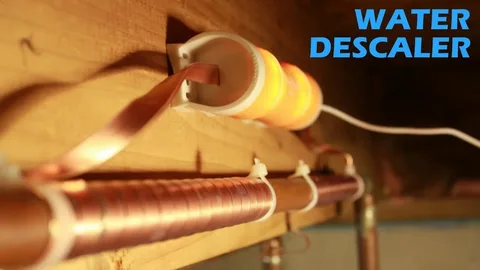
An electronic descaler—sometimes called a water conditioner or salt-free descaler—is a device that wraps around your main water pipe. Instead of removing minerals like calcium and magnesium, it uses electromagnetic or electronic pulses to alter the behavior of these minerals as they travel through the plumbing system.
Unlike traditional softeners, electronic descalers:
- Do not use salt
- Do not discharge wastewater
- Do not require brine tanks
- Do not remove hardness minerals
They are marketed as low-maintenance, environmentally friendly alternatives to water softeners.
But here’s the important distinction: they condition water—they do not soften it.
How Hard Water Causes Scale
Before deciding if a descaler works, it helps to understand how scale forms.
Hard water contains dissolved calcium and magnesium. When water is heated or evaporates, those minerals crystallize and stick to surfaces. Over time, this buildup:
- Narrows pipe diameter
- Reduces water heater efficiency
- Damages heating elements
- Leaves residue on fixtures
- Shortens appliance lifespan
In water heaters especially, scale acts like insulation. Even a thin layer forces the unit to work harder, increasing energy consumption.
The goal of any treatment system is to prevent those minerals from attaching to surfaces.
How Electronic Descalers Claim to Work
Electronic descalers generate a frequency field through coils wrapped around the pipe. The theory is that this electromagnetic field changes the crystalline structure of calcium carbonate as it moves through the water.
Instead of forming hard, sticky calcite crystals (which attach to surfaces), the minerals supposedly form aragonite crystals, which remain suspended in the water and flow through the system.
In theory, that means:
- Less scale sticking to pipes
- Less buildup in water heaters
- Reduced spotting on fixtures
But here’s the key: the minerals are still present in the water.
You will still measure the same hardness level with a test kit.
Do Electronic Descalers Actually Work?
This is where things get nuanced.
1. In Mild to Moderate Hard Water
In areas with mild to moderate hardness (around 3–7 grains per gallon), many homeowners report reduced scale buildup and easier cleaning.
In these conditions, electronic descalers may:
- Slow new scale formation
- Reduce hardness buildup on heating elements
- Make existing scale easier to remove
They may be sufficient if your goal is simply minimizing visible scale—not eliminating hardness entirely.
2. In Very Hard Water
In areas with high hardness levels (10+ grains per gallon), performance is less predictable.
Because minerals are not removed, heavy hardness can still overwhelm the system. You may see:
- Continued buildup in high-heat areas
- Limited improvement in spotting
- No measurable reduction in hardness
For severe hard water, traditional ion-exchange softeners typically provide more consistent results.
3. In Existing Heavy Scale Systems
If pipes and appliances already contain thick scale deposits, electronic descalers are unlikely to reverse major buildup quickly. They are better viewed as preventative devices rather than restorative ones.
Electronic Descalers vs. Traditional Water Softeners
Understanding the difference between descalers and softeners is critical.
Electronic Descaler
- Does not remove minerals
- No salt required
- No wastewater discharge
- Minimal maintenance
- Lower upfront cost
- Effectiveness depends on water conditions
Ion-Exchange Water Softener
- Removes calcium and magnesium
- Requires salt and periodic refilling
- Produces discharge during regeneration
- Proven reduction in hardness
- Higher upfront and ongoing cost
- Consistent performance in high-hardness areas
If your priority is true soft water—silky skin feel, soap lather improvement, zero mineral hardness—only a water softener can deliver that.
If your priority is reducing scale buildup without salt, an electronic descaler may be sufficient in the right environment.
What the Research Says
Scientific studies on electronic descalers show mixed results.
Some lab tests demonstrate changes in crystal structure under controlled conditions. However:
- Real-world plumbing systems vary widely.
- Water chemistry differs from region to region.
- Temperature, flow rate, and pipe material affect performance.
Because of these variables, outcomes are inconsistent.
This is why reviews tend to be polarized—some homeowners swear by them, while others see little difference.
When an Electronic Descaler Makes Sense
An electronic descaler may be a reasonable option if:
- Your water hardness is mild to moderate
- You want low maintenance
- You prefer avoiding salt systems
- You have septic concerns
- You want a more affordable upfront solution
- You mainly want to reduce scale in heaters and pipes
They are also attractive for:
- Rental properties
- Vacation homes
- Small households
- Situations where space is limited
Installation is typically simple, requiring access to the main water line and a nearby electrical outlet.
When a Traditional Softener Is the Better Choice
A traditional softener is usually the better solution if:
- Water hardness is high
- You want completely soft water
- You have frequent scale damage to appliances
- Soap scum is a major issue
- Skin and hair dryness are concerns
- You want measurable hardness reduction
Softening is the only method that actually removes calcium and magnesium from the water.
Common Misconceptions About Electronic Descalers
“It Will Remove Hardness”
It won’t. Your water hardness test reading will stay the same.
“It Works Instantly”
Scale reduction can take weeks or months, and existing buildup may not disappear quickly.
“It’s the Same as Salt-Free Softeners”
Not exactly. Salt-free template-assisted crystallization (TAC) systems use media tanks, while electronic descalers rely solely on electromagnetic pulses.
“It’s a Scam”
They are not inherently scams—but they are often oversold. Performance depends on water conditions and realistic expectations.
Real-World Considerations Before Installing One
Before choosing any water treatment system, you should:
- Test your water hardness level.
- Check for iron or manganese presence.
- Understand whether your main concern is scale prevention or true soft water.
- Evaluate plumbing age and current buildup condition.
Water chemistry matters. A solution that works well in one home may not perform the same in another.
Cost Comparison
Electronic descalers typically cost significantly less than full water softener systems.
- Lower equipment cost
- Minimal installation labor
- No salt purchases
- No drain connections required
Softener systems cost more upfront and include ongoing salt expenses, but they provide more predictable hardness control.
When evaluating cost, consider:
- Appliance lifespan
- Water heater efficiency
- Plumbing maintenance
- Cleaning product usage
Sometimes the higher upfront cost of a softener pays off long term in severe hard water conditions.
Can You Combine Systems?
Yes.
Some homeowners use:
- A water softener for whole-house hardness removal
- A scale prevention device specifically for tankless water heaters
- Or a descaler combined with filtration for sediment control
The right configuration depends on your home’s needs.
The Bottom Line: Do Electronic Descalers Work?
Electronic descalers can work—but within limits.
They do not remove minerals. They may reduce scale adhesion under certain water conditions. They are not a universal replacement for softeners.
If you have mild to moderate hardness and want a low-maintenance solution, they can be helpful.
If you have severe hard water and want true soft water results, a traditional water softener remains the most reliable option.
The key is matching the solution to your specific water chemistry and expectations—not just the marketing claims.
Understanding that difference prevents disappointment and helps you make a smarter long-term decision for your home’s plumbing system.
Hard water is manageable—but only when you choose the right tool for the job.