Key Highlights:
· How the British curriculum supports balanced development from the Early Years Foundation Stage (age 3) through primary schooling
· Why play-led learning and structured routines in the early years build confidence, curiosity, and emotional security
· An overview of the subjects in the British school curriculum and how knowledge is sequenced to deepen understanding over time
· The role of personal development, character education, and wellbeing in shaping confident, resilient learners
· How smaller preparatory settings provide continuity, individual attention, and strong pastoral care during formative years
· What parents should consider when assessing private school fees in London, beyond headline costs
· How personalised teaching approaches and Individual Education Plans support steady academic and personal progress
· Why the British curriculum’s breadth and adaptability prepare children effectively for secondary education and life beyond school
For parents who approach education with care and foresight, the British curriculum continues to stand out for its sense of proportion. From the age of three, it offers a carefully balanced framework that protects childhood while laying secure academic foundations.
Rather than chasing early results, it prioritises steady development, intellectual curiosity, and emotional maturity, qualities that serve children well long after their school years.
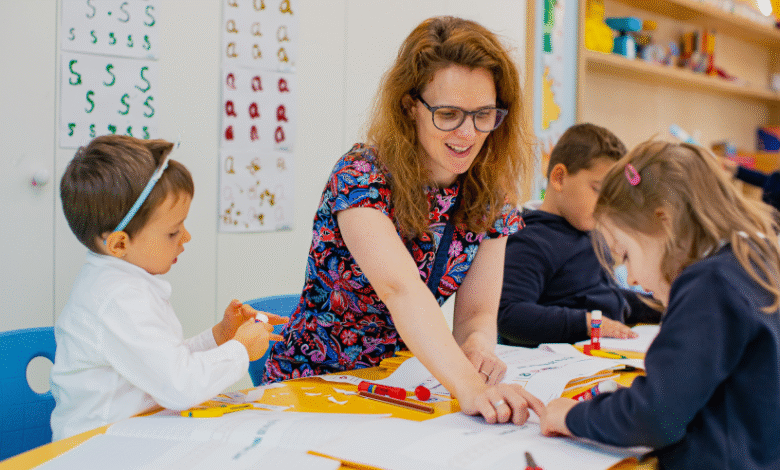
The educational journey begins with the Early Years Foundation Stage, encompassing nursery and reception, often referred to as kindergarten UK. At this formative stage, learning is not driven by formal instruction or performance targets. Instead, children are supported through structured play, purposeful interaction, and consistent routines. Language development, early numeracy, physical confidence, and social awareness are all fostered through experiences that feel natural rather than forced.
These early encounters with learning shape a child’s attitude towards school itself, influencing confidence, engagement, and resilience in the years ahead.
As children progress into primary education, the curriculum becomes more clearly defined while remaining sensitive to developmental pace. Reading, writing, and mathematics form the academic core, supported by a broad range of complementary disciplines. The subjects in the British school curriculum typically include English, mathematics, science, history, geography, art, music, physical education, and computing. What distinguishes the British approach is not the breadth alone, but the deliberate sequencing of knowledge and skills, allowing understanding to deepen over time rather than being hurried.
Literacy education begins with systematic phonics and evolves into comprehension, analysis, and confident written expression. Mathematics is taught with an emphasis on conceptual understanding, enabling children to reason, explain, and apply methods with confidence. The humanities invite pupils to explore people, places, and events beyond their immediate experience, while creative subjects nurture imagination and self-belief. Together, these areas of study create an education that is intellectually rigorous yet human in its outlook.
Alongside academic learning, personal development occupies a central role. British primary education increasingly recognises that character, behaviour, and wellbeing are inseparable from achievement. Children are guided to develop empathy, self-discipline, perseverance, and respect for others. These attributes are cultivated deliberately, not left to chance, and are embedded into daily school life. The result is an environment where pupils feel secure enough to take risks, ask questions, and learn from mistakes.
This philosophy is particularly evident in smaller preparatory settings, where individual attention is woven into the fabric of the school day. One such example is Heath House Preparatory School, a long-established, family-run private school in Blackheath, where personalised learning, small class sizes, and strong pastoral care reflect a belief that academic excellence and character formation should progress side by side. In schools of this nature, children benefit from continuity and a deep sense of belonging throughout their early and primary years.
For many modern families, practical considerations sit alongside educational values. Discussions around private school fees in London are often framed purely in financial terms, yet parents with experience tend to assess what those fees represent.
Smaller classes allow teachers to know each pupil well. Lessons can be adapted thoughtfully, strengths nurtured, and difficulties addressed early. Time, attention, and expertise are all finite resources, and they shape a child’s daily experience far more than facilities alone.
Seen through this lens, private school fees in London are frequently viewed as an investment in stability, individual care, and long-term development. Children benefit from consistent teaching relationships, enriched curricular opportunities, and a pace of learning that respects individual readiness. For families balancing professional commitments with parenting, this reassurance carries significant weight.
The British curriculum’s adaptability further strengthens its appeal. While it is underpinned by a national framework, effective schools exercise professional judgement in its delivery. Teachers are encouraged to respond to the needs of their pupils, adjusting methods and expectations where appropriate.
Individual Education Plans may be introduced to provide targeted support or extension, ensuring that each child is appropriately challenged and supported throughout their learning journey.
As pupils move through the later primary years, increasing emphasis is placed on independence and responsibility. Children are encouraged to articulate ideas clearly, manage tasks with growing confidence, and collaborate effectively with peers.
By the time they approach the transition to secondary education, they are expected not only to possess secure academic knowledge but also the self-assurance to navigate new environments and expectations.
The subjects in the British school curriculum are designed to support this progression thoughtfully. Rather than narrowing focus prematurely, the system preserves breadth during the primary years, allowing children to discover interests and aptitudes organically. This broad foundation supports both academic success and personal fulfilment, equipping pupils with transferable skills that extend well beyond the classroom.
Ultimately, the enduring strength of the British curriculum lies in its measured approach. It values continuity over novelty, depth over speed, and development over display. For parents making considered educational choices, this offers confidence that their child’s early years will be shaped by consistency, care, and purpose.
In a landscape where educational trends come and go, the British system continues to demonstrate that thoughtful structure, strong relationships, and respect for childhood remain the most reliable foundations for future success.