Introduction: Why the I-75 Power Line Shutdown Made Headlines
The I-75 power line shutdown became one of those regional news stories that captured national attention. Interstate 75, commonly referred to as I-75, is one of the busiest highways in the United States, running from Florida all the way to Michigan. Any disruption along this massive stretch of road impacts not only commuters but also long-haul truckers, businesses, and supply chains. So when news broke that a major power line incident forced parts of I-75 to shut down, the ripple effect was immediate.
At first glance, a “power line shutdown” might not sound like a major crisis. But when you consider how much infrastructure relies on both electricity and highways, the picture becomes much bigger. In this case, high-voltage transmission lines that ran across sections of I-75 either came down unexpectedly or needed urgent repair, forcing officials to close sections of the highway for safety reasons. The shutdown triggered traffic delays, economic setbacks, and a wave of questions about infrastructure reliability.
This article explores everything you need to know about the i-75 power line shutdown—what caused it, the impact on transportation and businesses, how officials handled the crisis, and what lessons we can learn to prevent similar issues in the future.
Connection Between Highways and Power Lines
To truly grasp the importance of the shutdown, we first need to understand how highways like I-75 interact with power infrastructure. It’s not uncommon for transmission lines to cross highways. In fact, highways are often the most direct routes for power lines to stretch across states. These lines carry electricity from generation facilities, like power plants or renewable energy farms, to substations and then to local grids.
But here’s where things get tricky: these lines are massive, heavy, and often suspended at great heights. When maintenance is required or when an accident occurs—such as extreme weather bringing them down—it creates a safety hazard for anyone traveling below. A single downed line can spark fires, block traffic, and even cause fatalities if vehicles come into contact with live wires. That’s why authorities often have no choice but to close down entire sections of highways like I-75 when problems arise.
So the i-75 power line shutdown wasn’t just about preventing traffic congestion—it was a public safety measure. Keeping vehicles off the road under dangerous transmission lines is non-negotiable, even if it creates significant inconvenience.
What Triggered the I-75 Power Line Shutdown?
The big question on everyone’s mind was: what actually caused the shutdown? The answer is multi-layered. Early reports pointed to a structural failure where power lines sagged dangerously close to the highway. In some cases, weather played a role—strong winds, ice accumulation, or heavy storms can weaken the stability of transmission towers.
Another possible factor was aging infrastructure. Much of the U.S. electrical grid is decades old, with many transmission lines and towers built in the mid-to-late 20th century. While these systems are built to last, they require regular inspections and upgrades. If maintenance lags behind demand, breakdowns are bound to happen.
Additionally, construction or accidental damage can lead to sudden shutdowns. Crews working near the interstate may have unintentionally compromised a tower’s foundation or destabilized part of the grid. Until full investigations are complete, officials often give only partial explanations, but one thing is certain: the shutdown was a necessary step to protect lives and repair critical infrastructure.
The Immediate Impact on Traffic and Commuters
When word spread that sections of I-75 were closed due to the power line shutdown, drivers scrambled to find detours. For local commuters, this meant longer travel times, unexpected delays, and in some cases missed work or appointments. For truckers, the impact was even greater. I-75 is a major freight artery, especially for goods moving between the Midwest and the Southeast. A shutdown disrupts supply chains, delays deliveries, and increases fuel costs due to detours.
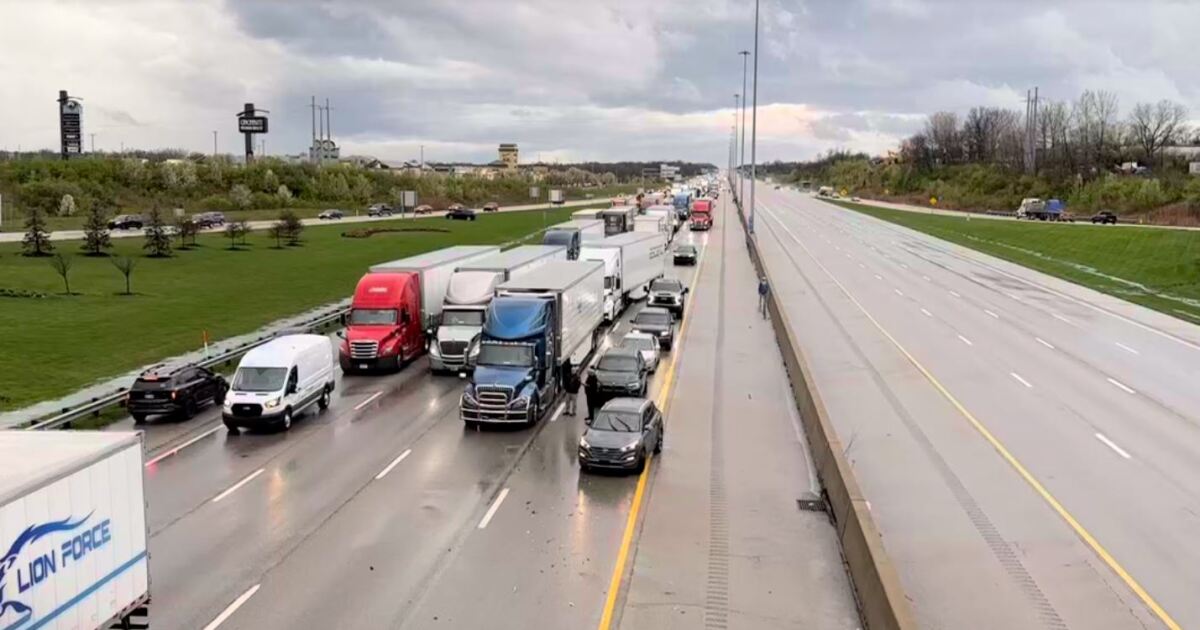
Traffic backed up for miles in some areas, with detour routes quickly becoming congested. GPS systems rerouted drivers onto smaller roads not designed to handle heavy truck traffic, causing additional headaches for local communities. Businesses near the affected area also felt the pinch, as customers avoided the congested corridor altogether.
In short, the shutdown was not just about repairing a power line—it was a stark reminder of how interconnected transportation and infrastructure truly are. A single point of failure can create ripple effects that stretch across states.
Safety Concerns That Justify a Shutdown
Critics often argue that road closures like the i-75 shutdown are too disruptive, but safety experts insist that they are absolutely necessary. High-voltage power lines carry massive amounts of electricity, often in the range of hundreds of thousands of volts. If one of these lines were to come into direct contact with vehicles, the results could be catastrophic.
Even if the lines are not live at the moment, they can still hold residual charges. Furthermore, sagging or fallen lines create uncertainty—authorities cannot always guarantee whether they are energized or not until crews assess the situation. The safest move is to shut down the roadway immediately and reroute traffic until the area is secured.
Beyond the risk to vehicles, workers repairing the lines also require a safe environment. Having heavy traffic moving underneath or nearby complicates repair efforts and increases the risk of accidents. So while drivers might feel inconvenienced, the shutdown ensures both public and worker safety.
Economic Fallout from the I-75 Shutdown
One of the less visible consequences of the shutdown was its impact on local and regional economies. Trucking companies faced higher costs due to delays and rerouting. Small businesses, particularly those located along I-75, saw a sudden drop in customer traffic. Gas stations, diners, motels, and convenience stores that depend heavily on highway travelers experienced noticeable slowdowns.
Meanwhile, businesses waiting on shipments dealt with inventory shortages. For industries that rely on just-in-time supply chains, such as automotive and manufacturing sectors, even a short disruption can create cascading effects. A delayed truck carrying parts might halt an entire assembly line. Multiply that by several days, and the losses become significant.
The economic impact also extends to government budgets. Repairs, detour management, and emergency response all come with hefty price tags. While insurance may cover some damages, taxpayers often shoulder part of the financial burden when infrastructure failures occur.
How Authorities Responded to the Shutdown
Handling a crisis like this requires coordination between multiple agencies. State highway patrol, the Department of Transportation, utility companies, and local emergency responders all had to work together during the i-75 power line shutdown.
First, law enforcement secured the affected area, preventing vehicles from entering dangerous zones. Next, traffic control teams set up detours and managed the sudden influx of vehicles onto smaller roadways. Meanwhile, utility crews rushed to assess the situation, determining the extent of the damage and estimating repair times.
Communication was another major challenge. Authorities had to keep the public informed without causing panic. Updates were posted on traffic boards, social media, and news outlets. While some drivers criticized the lack of real-time updates, overall, the coordinated effort helped prevent serious accidents and ensured that repairs began as quickly as possible.
The Role of Technology in Managing Shutdowns
One of the fascinating aspects of modern infrastructure management is how technology plays a role in crises like the i-75 power line shutdown. Advanced monitoring systems can detect unusual power fluctuations, sagging lines, or weather-related risks before they become emergencies.
Traffic management software also helps reroute vehicles efficiently. GPS apps like Google Maps and Waze integrate live traffic data, providing alternative routes within minutes of a shutdown. However, even the best technology has limits when thousands of vehicles are suddenly displaced.
Looking ahead, experts argue that smart infrastructure—using sensors, AI, and predictive analytics—could reduce the frequency of shutdowns. Imagine a system where a tower alerts utility companies about structural weaknesses before a collapse occurs i-75 Power Line Shutdown. That’s the direction infrastructure management is heading, though we’re not fully there yet.
Public Reaction and Frustration
As with any major shutdown, public reaction was a mix of understanding and frustration. Some commuters vented on social media about long delays and poorly marked detours. Others expressed concern about the condition of America’s infrastructure, calling the incident a wake-up call for more investment in modernization.
Interestingly, many people were supportive once they understood the safety risks involved. Knowing that a live power line could have turned the highway into a deadly zone shifted perspectives. Still, the shutdown highlighted the need for better communication strategies—drivers want real-time updates, estimated reopening times, and clear detour signage to feel less blindsided.
Lessons Learned from the I-75 Power Line Shutdown
Every crisis teaches valuable lessons, and the i-75 shutdown is no exception. A few key takeaways stand out:
- Infrastructure Upgrades Are Urgent – Aging power lines and towers need modernization to withstand today’s demands and extreme weather.
- Preparedness Pays Off – States must invest in better emergency response systems to handle sudden shutdowns without creating chaos.
- Communication Is Key – Clear, timely updates can reduce public frustration and keep traffic flowing more smoothly.
- Interconnected Systems Require Collaboration – Highways, power grids, and local governments must work together, because a problem in one system affects them all.
These lessons can guide policymakers and engineers as they work toward creating more resilient infrastructure.
The Bigger Picture: America’s Infrastructure Challenges
While thei-75 Power Line Shutdown may feel like a local issue, it ties into a much larger national conversation. The American Society of Civil Engineers consistently grades U.S. infrastructure as needing significant improvements. Power grids, highways, and bridges across the country face similar challenges.
Events like this remind us that we are often one storm i-75 Power Line Shutdown, one accident, or one mechanical failure away from major disruption. Investing in modern infrastructure, including underground power lines, stronger towers, and smart monitoring systems, could prevent future shutdowns. However, such investments require political will, funding, and long-term planning.
Moving Forward: What Comes Next After the Shutdown
The good news is that shutdowns like i-75 Power Line Shutdown this don’t last forever. After repairs were completed, I-75 reopened, and traffic returned to normal. But the incident left behind important questions: How will officials prevent this from happening again? Will utility companies step up inspections and upgrades? Will state governments allocate more funding for preventive maintenance?
Experts believe the answer lies in proactive measures. Instead of reacting to failures, we need to predict and prevent them. That means more frequent inspections, stronger infrastructure designs, and a willingness to invest in modernization before crisis hits.
Conclusion: Why the I-75 Power Line Shutdown Is a Wake-Up Call
The i-75 power line shutdown may have started as a localized safety issue, but its impact reached far beyond the affected stretch of highway. It disrupted traffic, rattled supply chains, frustrated commuters, and sparked discussions about the state of America’s infrastructure.